Zendure SolarFlow 2400 AC+ review
With the disappearance of the net-metering scheme in 2027, more and more households are becoming interested in storing solar power instead of feeding it back. Zendure cleverly responds to this with the SolarFlow 2400 AC+, the successor to the popular SolarFlow 2400 AC. And that successor is a big upgrade on a number of fronts.
From the box to the socket
The SolarFlow 2400 AC+ arrives in a sturdy cardboard box. Inside the box, we find the main unit with built-in 2.4 kWh LFP battery and a three-metre AC cable. Note that you do not connect solar panels directly to this unit. It is a pure grid-connected system that charges via the wall socket and the surplus of your existing installation.
Technical specifications
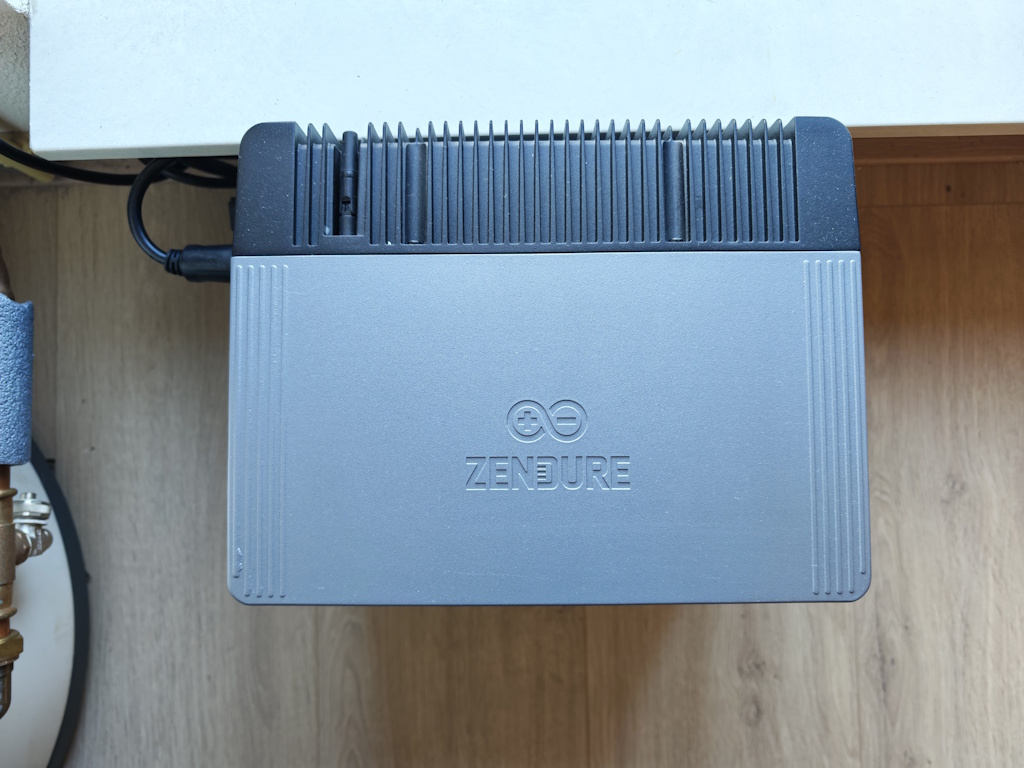
The SolarFlow 2400 AC+ has a built-in LiFePO4 battery of 2.4 kWh that you can expand to as much as 16.8 kWh with additional "AB3000L" batteries. Those batteries have a price tag of €729 per 2.8 kWh. Via an ordinary socket, the system discharges at a maximum of 800 watts, but if you connect it to a dedicated group with a fixed connection, you can discharge up to 2400 watts. Charging then even goes up to 3200 watts. The off-grid socket on the side delivers up to 2400 watts continuously, and can handle peaks of up to 3600 watts. The casing is IP65-certified and cooling is passive.
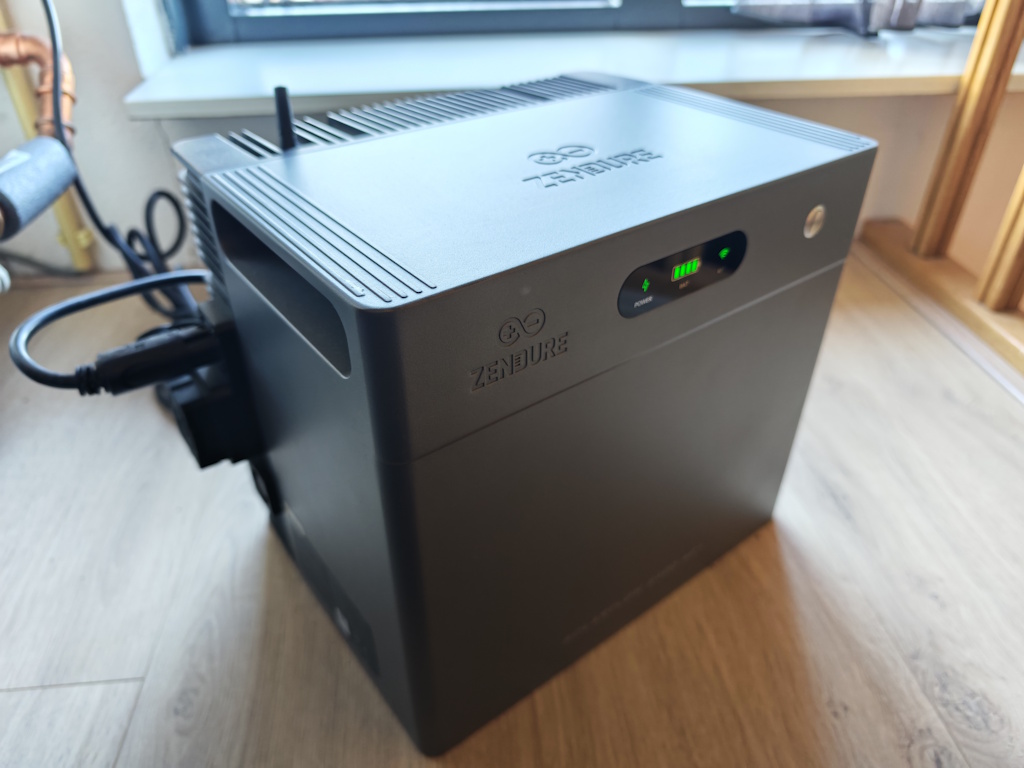
The battery is still a heavy boy though, the 2400 AC+ weighs 27.8 kilograms. Round-trip efficiency has been improved, according to Zendure, meaning less energy is lost during charging and discharging.
Design and installation
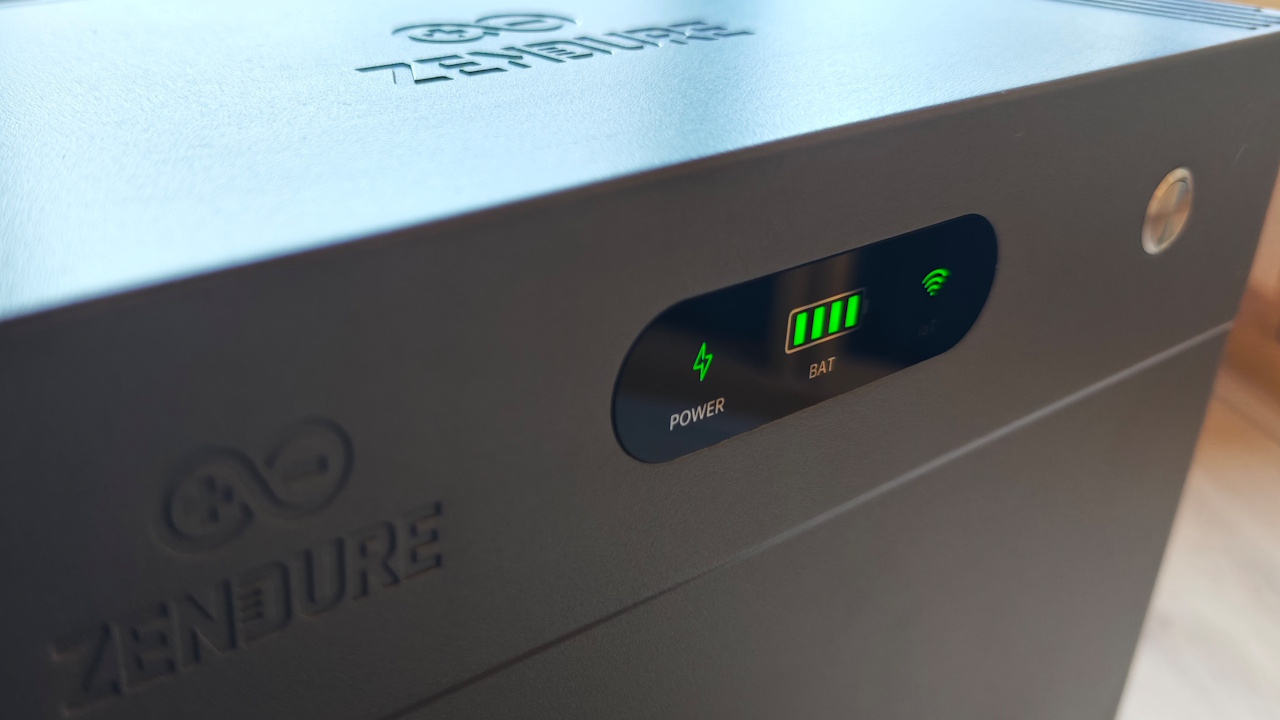
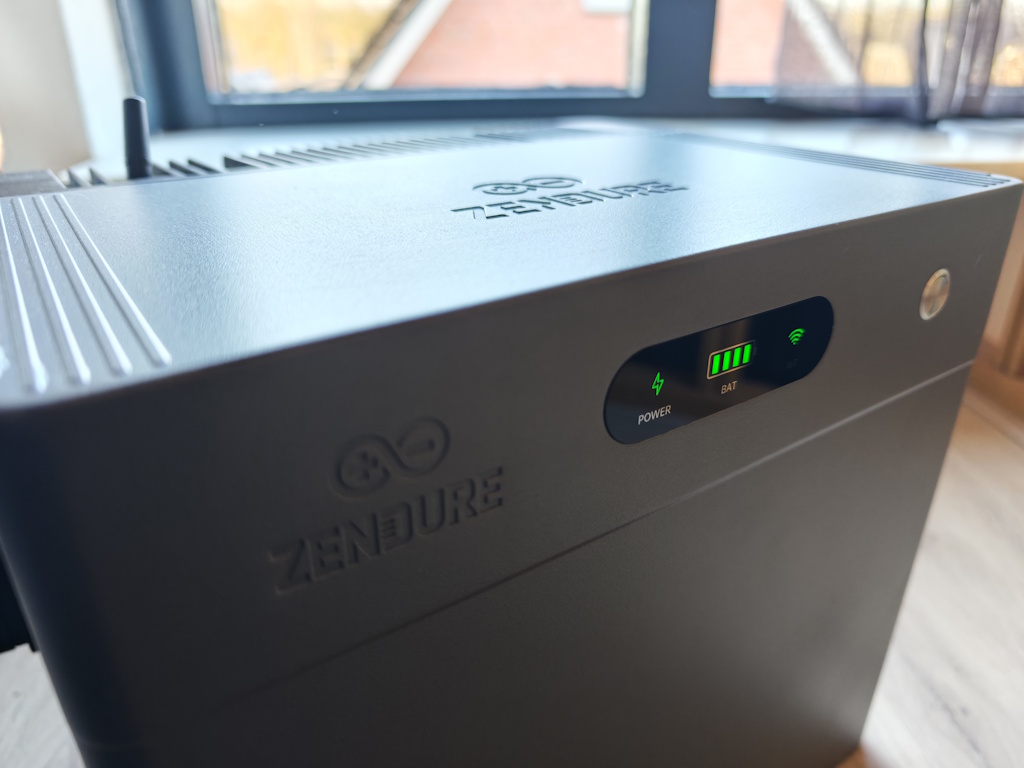
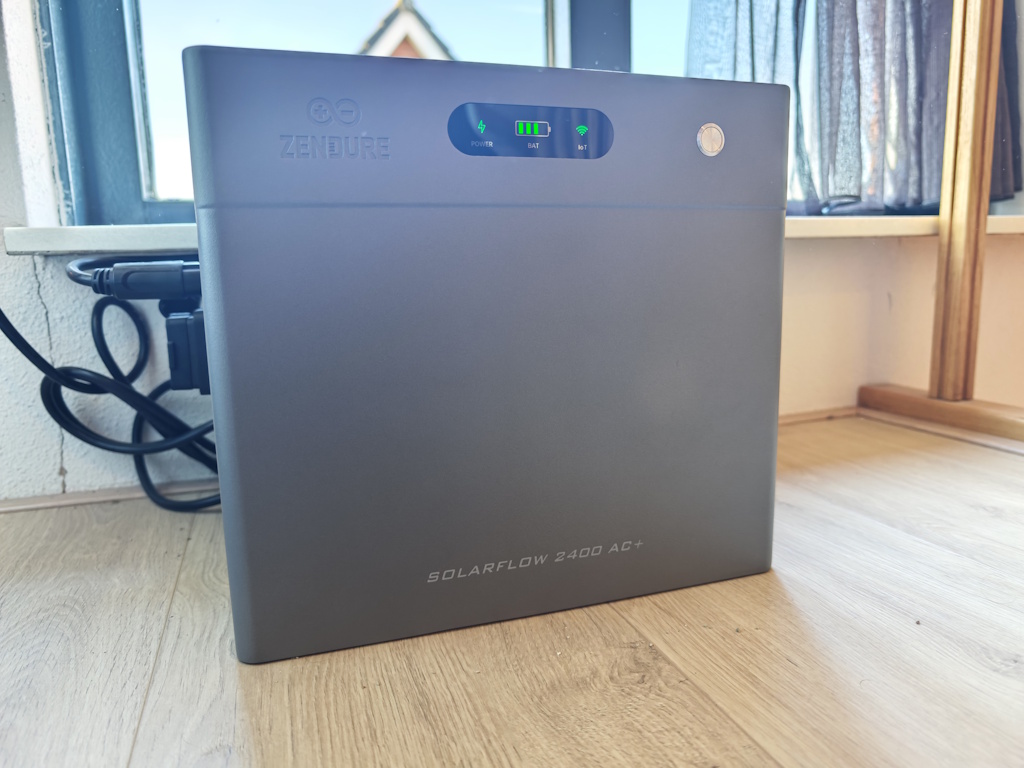
In terms of design, the SolarFlow 2400 AC+ resembles the SolarFlow 800 Pro we tested earlier, but slightly more angular and robust. The metal casing with cooling fins on the back provides passive heat dissipation. On top is an external Wi-Fi antenna, a handy addition if you place the device in a shed or under a canopy. On the front, you'll find an LED status bar that provides information on charging status, AC connection and wifi.
Installation is plug-and-play and completed in about 10 minutes. As with other home batteries, do not place the system in your escape route and ensure adequate ventilation around the device.
When it comes to safety, Zendure has not been idle. The SolarFlow 2400 AC+ is equipped with ZenGuard, a security system that combines a dual BMS architecture with a built-in aerosol extinguishing system and a pressure relief valve. Essentially, the system protects itself from overheating, over-discharging and, in the worst case, can even suppress fire. The battery also features a self-heating function for cold winter days, should you have it outside.
In use: Zenki mode
The Zendure app offers three modes: Zenki, Auto and Expert. We have been running the SolarFlow 2400 AC+ mainly in Zenki mode for the past few weeks and we like it. Zenki is the AI-driven mode that runs locally on the device itself. The system analyses dynamic energy tariffs, weather forecasts and your consumption pattern to then decide for itself when charging and discharging is smartest. Because everything is processed locally, the system reacts at lightning speed, within seconds.
In practice, this means that the battery automatically charges when electricity prices are low, or when your solar panels generate more than you use, and discharges as soon as prices rise or the sun goes down. Don't have a dynamic contract? Then Auto mode is a great alternative that focuses more on zero-to-the-meter.
In early March, we had the first days where we were able to stay fully battery and solar at zero. A great moment, because that means the system is doing exactly what it was designed to do: storing what the panels generate during the day and consuming that in the evening and night without drawing anything from the grid. With the longer and sunnier days coming up, this will only become more common.
Since we also have the Solarflow 800 Pro still running, the output of the battery is "shared". In the Zendure app, we cannot indicate that we have battery neatly connected to its own phase. This is unfortunate because with that, the Zendure divides the 800-watt plug-in capacity between the two batteries with 400 watts on each phase.
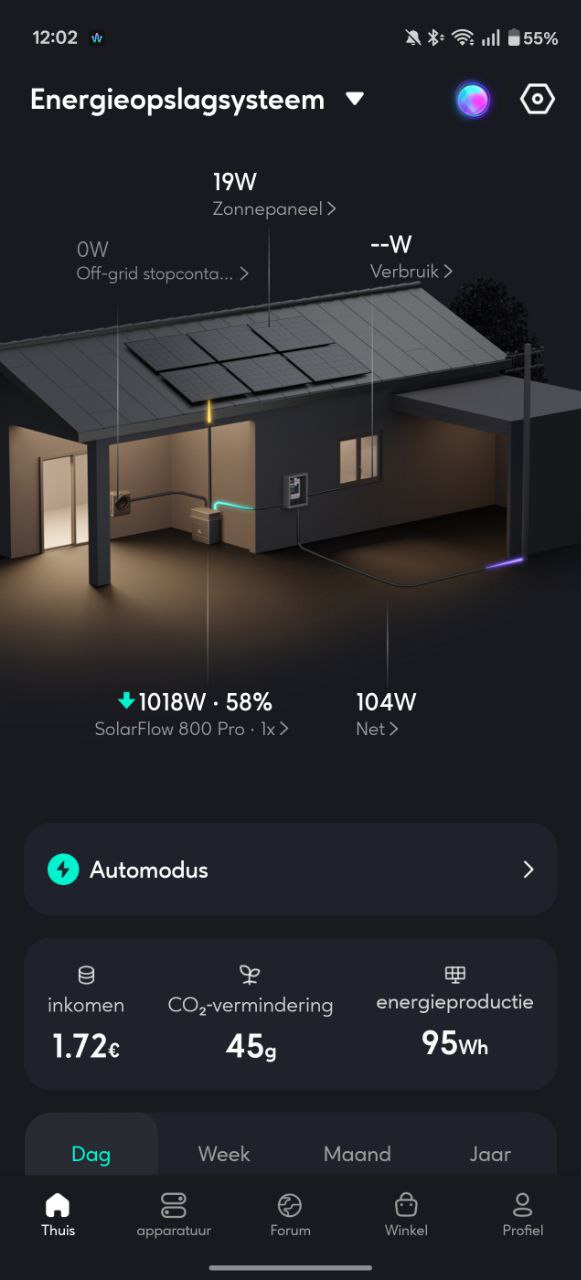
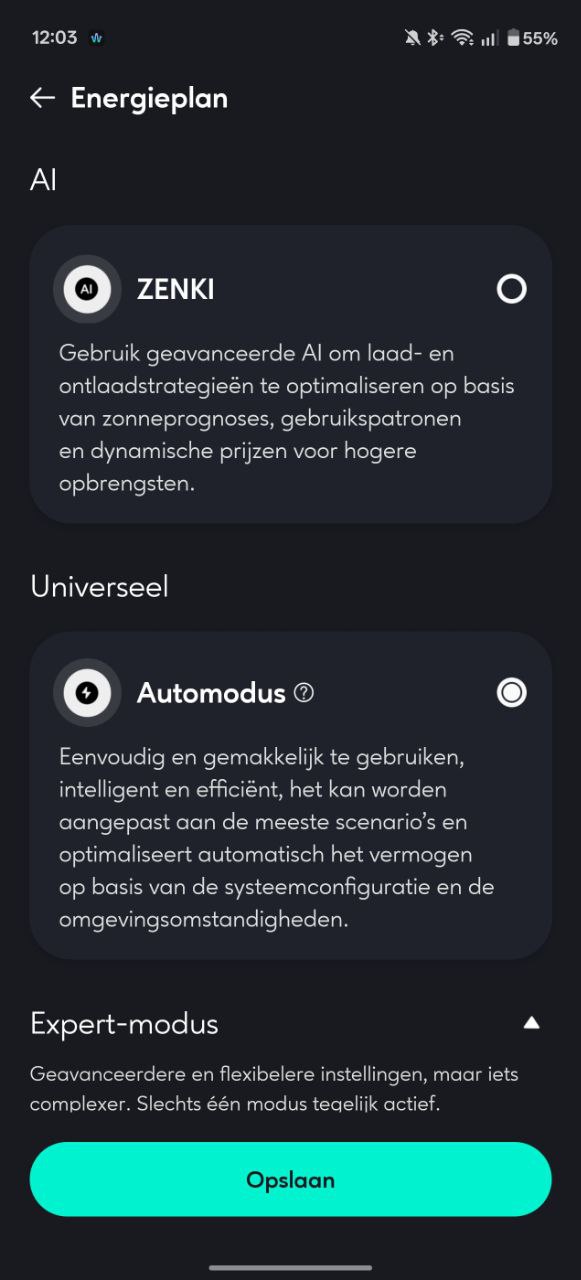
Those who want full control can opt for Expert mode with manual timings and priorities. That mode is especially interesting for those who like to turn the knobs themselves, but for most households, Zenki or Auto is more than enough.
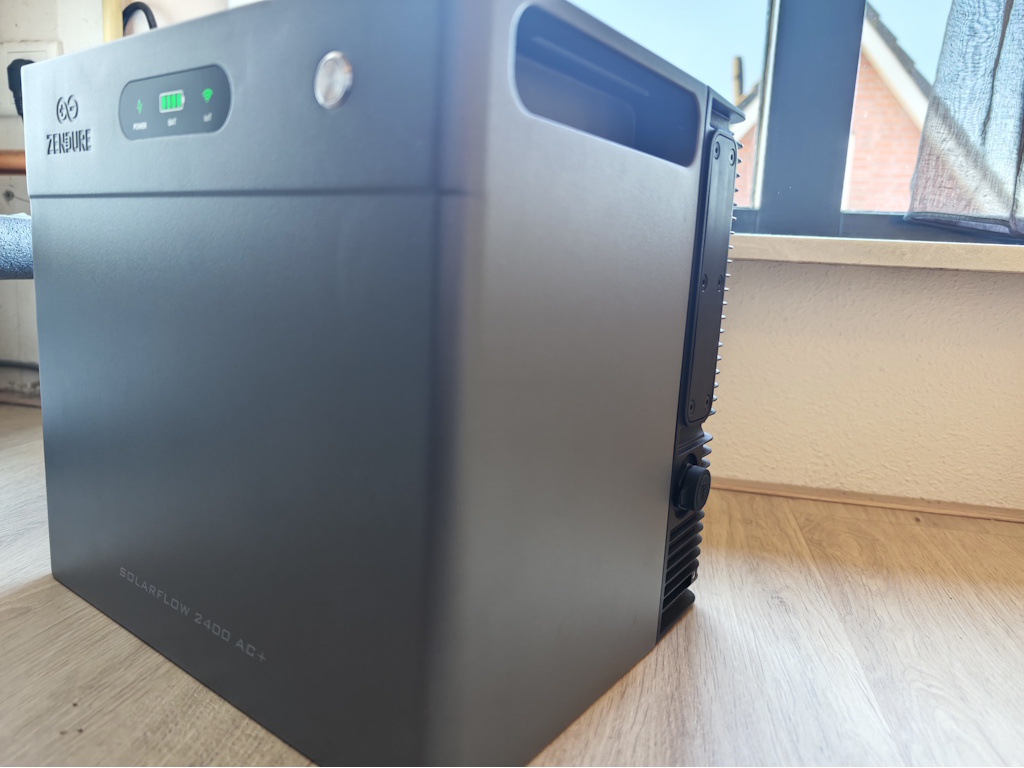
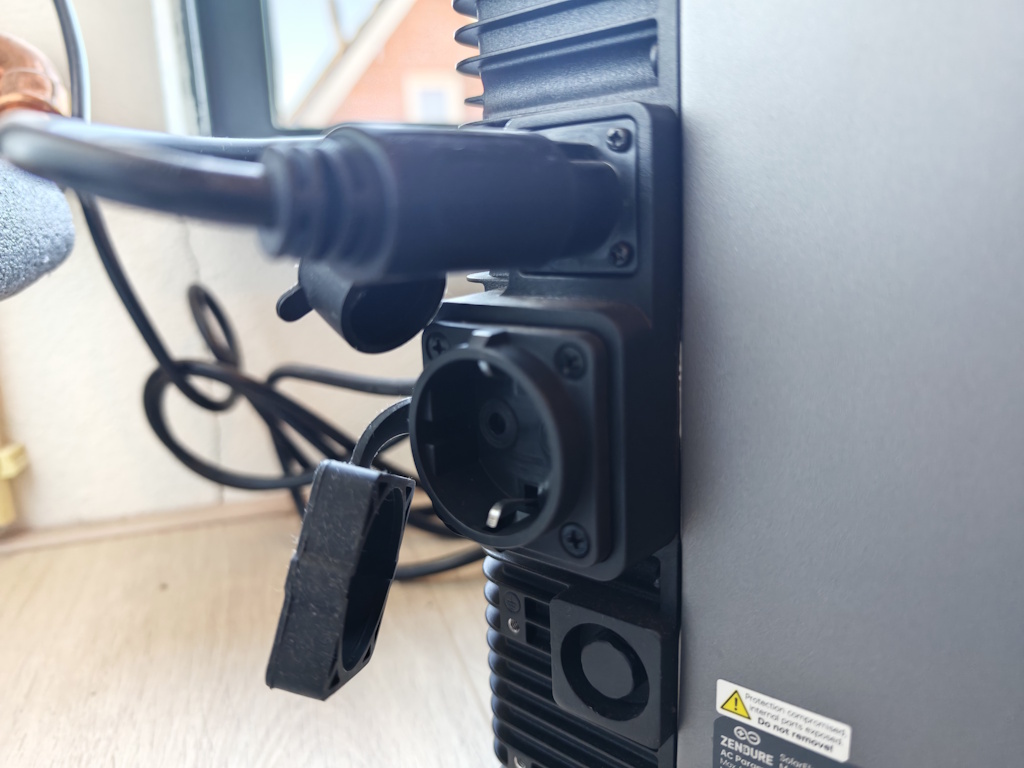
On the side of the unit is a physical socket that is separate from the mains. In case of a power failure, the system switches over within 20 milliseconds. You can connect appliances to it up to 2400 watts continuously in island mode. Think of a fridge, freezer or Wi-Fi router. Handy as an emergency power supply, but also if you want to use the battery somewhere where there is no socket nearby.
These days, we can also link the HomeWizard P1 meter in the Zendure app only that doesn't quite work flawlessly yet. The home's consumption regularly stays at 0 watts.
Review
The Zendure SolarFlow 2400 AC+ is a very interesting AC plug-in battery at the moment as far as we are concerned. It combines high efficiency with a compact design, excellent safety features and smart software. The Zenki mode works well in our case and helps balance consumption. A pity is that with multiple systems, we cannot tell which phase the battery is connected to in a 3-phase house. This would allow us to make the best use of both plug-in batteries from Zendure.
You can buy this home battery from as little as €969 via Zendure itself!
- Latest safety technology in battery present
- Zenki mode works well
- Zero-to-the-meter fast, accurate
- Passive cooling, no noise
- Off-grid socket for emergency power 2400 watts
- Phase setting missing
- HomeWizard P1 meter does not pair well